
Choosing the right campaign objective is crucial in Google Ads. This guide explains how to pick the best objective, covering the types available, their benefits, and how to align them with your business goals.
What Are Campaign Objectives in Google Ads?
Campaign objectives represent the main goals of your Google Ads campaign, guiding your strategy and ad settings. Objectives focus on different stages of the customer journey, helping you reach the right audience with the right intent.
Types of Campaign Objectives Available in Google Ads
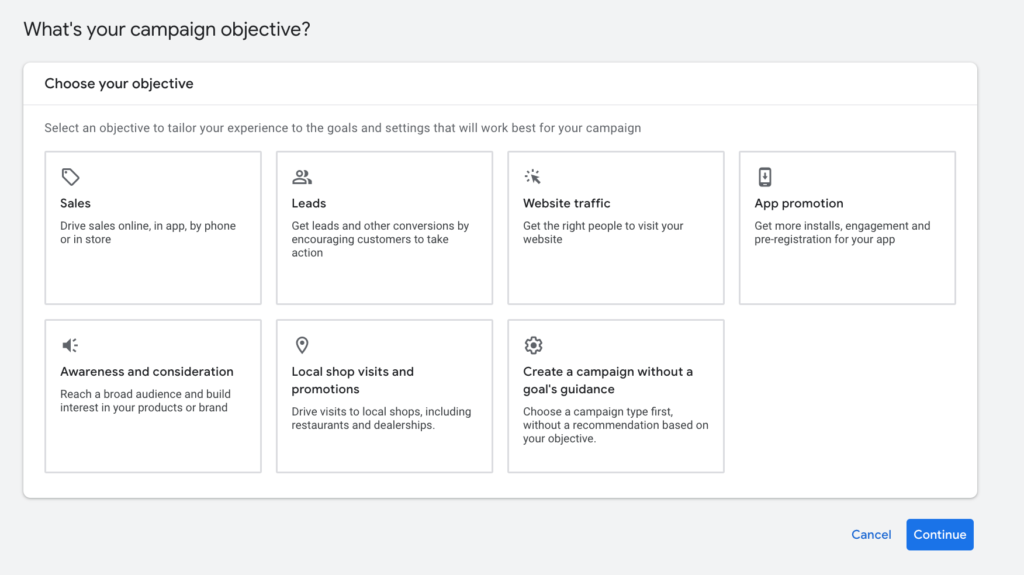
Google Ads offers the following objectives:
- Sales: To drive revenue or conversions on your website.
- Leads: To capture potential customer information.
- Website Traffic: To increase site visits and landing page views.
- Product and Brand Consideration: To encourage exploration of your products.
- Brand Awareness and Reach: To build your brand’s visibility.
- App Promotion: To drive app installs or in-app actions.
Each objective influences which features and settings are emphasized in your campaign.
Why Choosing the Right Campaign Objective is Important
Selecting the correct objective aligns your ad strategy with specific tools tailored to that goal, improving overall performance and ROI. Choosing an appropriate objective also enables better tracking through metrics that directly impact business results.
How to Choose the Best Campaign Objective for Your Goals
1. Define Your Business Goals
What outcomes do you want? For instance, are you seeking immediate sales, lead generation, or brand awareness?
2. Know Your Target Audience
Who is your audience? Tailor objectives based on their interests, preferences, and behaviors to reach them effectively at different journey stages.
3. Consider Your Budget and Resources
Budget limitations may suggest a focus on high-intent objectives like Sales or Leads, while larger budgets allow for broader awareness campaigns.
4. Analyze Your Industry and Competition
Look at competitor strategies and industry trends to understand the objectives best suited to your sector.
Google Ads Campaign Objectives Explained
Here’s a closer look at each campaign objective to help you decide which best suits your needs.
1. Sales Objective
Purpose: To drive conversions and revenue.
Best for: E-commerce, retail, or industries focused on sales.
Recommended Features: Conversion tracking, Smart Shopping campaigns.
Example Use Case for Sales Objective
If you’re an e-commerce site selling shoes, this objective can drive high-intent traffic directly to product pages.
2. Leads Objective
Purpose: To capture customer contact details for follow-up.
Best for: Service-based industries or businesses focused on lead generation.
Recommended Features: Lead form extensions, call ads.
Example Use Case for Leads Objective
A B2B software company can use this objective to collect leads through forms without driving users away from the ad.
3. Website Traffic Objective
Purpose: To drive visits to your website or landing page.
Best for: Businesses looking to increase web traffic for future retargeting.
Recommended Features: Dynamic search ads, broad match keywords.
4. Product and Brand Consideration
Purpose: To build product interest among potential customers.
Best for: Competitive markets where customers are researching products.
Recommended Features: Display ads, video ads.
5. Brand Awareness and Reach
Purpose: To build brand recognition.
Best for: New brands or those introducing new products.
Recommended Features: YouTube ads, reach-based targeting.
6. App Promotion
Purpose: To drive app installs or engagement.
Best for: Businesses focused on mobile app adoption or engagement.
Recommended Features: App campaigns, app extensions.
Tips for Choosing and Optimizing Google Ads Campaign Objectives
1. Experiment with Multiple Objectives
Running campaigns with different objectives can reveal which strategies perform best, providing insights for future campaigns.
2. Review and Adjust Objectives Regularly
Objectives should evolve with your business. Periodically evaluate your campaign goals and adjust objectives to reflect changes in your company.
3. Leverage the Performance Planner
Use Google’s Performance Planner to forecast potential outcomes based on different objectives and budgets, helping refine your approach.
4. Customize Google’s Recommendations
Use the suggestions provided for each objective as a starting point, but adjust them based on your unique needs, goals, and budget.
5. Track KPIs for Your Objective
Each objective includes key performance indicators, like conversion rates or click-through rates, that align with your business goals. Monitoring these KPIs helps with strategic adjustments.
Frequently Asked Questions About Google Ads Campaign Objectives
Can I Change My Campaign Objective After Launching?
Yes, but changes can impact campaign structure. It’s best to select an objective that aligns with your long-term goals from the start.
How Do I Know Which Objective Is Best for My Business?
Focus on your business’s primary goals and select an objective that matches. For example, if sales volume is the goal, prioritize the Sales objective.
Do Objectives Affect Ad Performance?
Yes, as each objective enables tools and settings optimized for specific outcomes, impacting your campaign’s success.
Conclusion
Choosing the correct objective is essential for effective Google Ads campaigns. The right choice connects you with the right audience and tools to maximize results, save costs, and boost ROI.
Recap of Steps to Choose the Best Objective:
- Define clear business goals.
- Understand your target audience.
- Review your budget and resources.
- Experiment with different objectives and Google Ads recommendations.
Using Google Ads objectives strategically helps you create high-impact, cost-effective campaigns that grow your business over time.